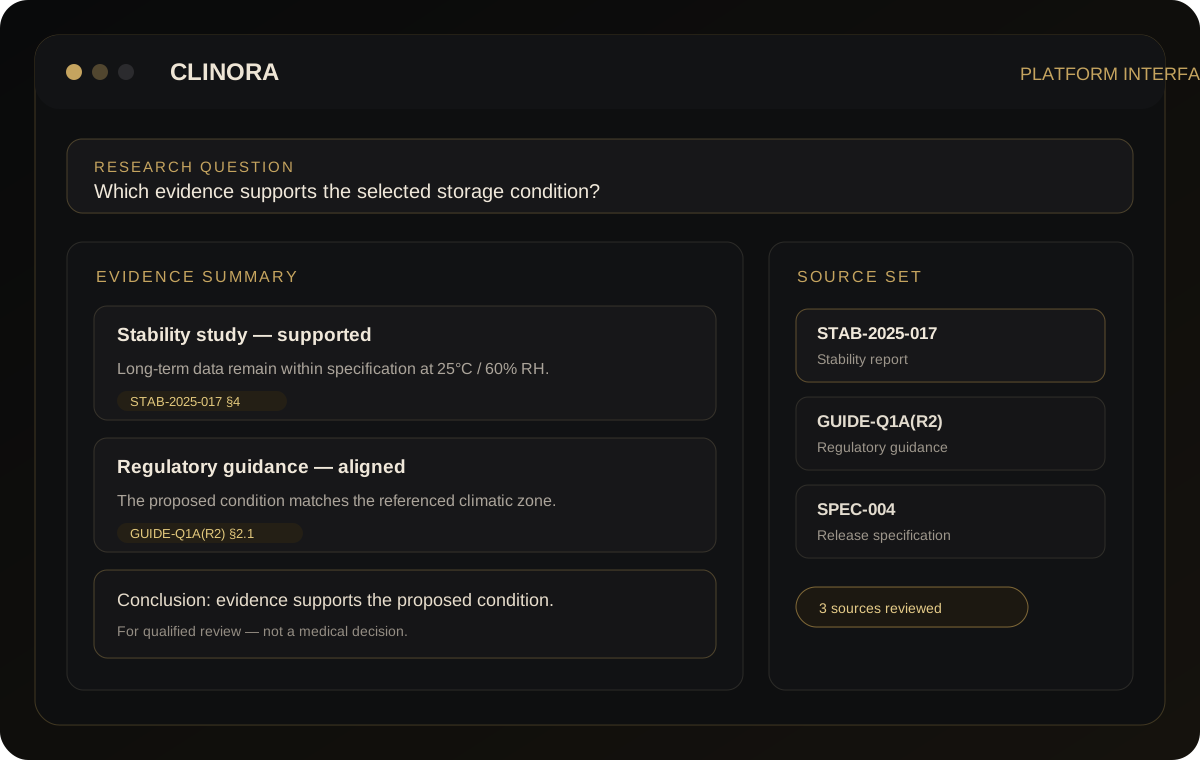
Typical approved inputs
- Peer-reviewed literature
- Protocols and study documents
- Guidelines and approved references
- Regulatory and quality material
- Internal research knowledge
- Authorised scientific datasets and metadata
Health and life sciences intelligence
Source-aware intelligence for medical, scientific, regulatory and life sciences knowledge work in controlled environments.
01 / The operational need
Evidence is dispersed across literature, protocols, regulatory material and internal research. Clinora is designed to help expert teams retrieve, compare and structure that knowledge while making provenance, uncertainty and review responsibility explicit.
Designed for
Operational shape
The exact boundary is agreed during assessment. These examples show the intended shape of the product, not a claim of universal compatibility.
Principal applications
The final scope is established during assessment and validated through a controlled pilot before wider deployment.
Core capabilities
Search approved scientific and internal collections with visible provenance and relevant context.
Organise findings, methods, populations and limitations into a structure suitable for expert review.
Extract and compare defined criteria, procedures, endpoints or requirements across selected documents.
Surface inconsistent findings, missing support and unresolved questions instead of flattening them into one answer.
Configure retrieval, terminology and output formats around a specific scientific domain and user group.
Retain citations, versions, reviewer status and material changes throughout the knowledge workflow.
Illustrative governed workflow
Final workflows, roles and review gates are configured with the organisation and validated during the pilot.
Define the domain, intended use, approved sources, exclusions and professional review standard.
Locate relevant material and organise it by evidence type, protocol element or research question.
Build review-ready summaries while preserving citations, limitations and conflicting evidence.
Clinical, scientific or regulatory professionals assess the output before it informs any subsequent work.
Clinora can be assessed for connection to approved literature services, document repositories, research knowledge bases and quality or regulatory workflows. The integration boundary depends on licensing, data sensitivity and the intended professional use.
The pilot can begin with non-patient, approved knowledge sources. Any later use of personal or health data requires a separate data-protection, security, legal and clinical-governance assessment before implementation.
Clinora is a professional knowledge-support environment. It does not diagnose, prescribe treatment or replace clinical or scientific judgement, and is not presented as a certified medical device.
Controlled pilot
One workflow. One user group. One bounded information set. One validation process. A good pilot ends with a clear decision to stop, refine or scale.
Start with a defined therapeutic area, protocol family or regulatory question.
Use a documented evidence boundary and versioned reference set.
Evaluate source coverage, fidelity, limitations and usefulness with the intended professionals.
Separate knowledge validation from any later patient-related or regulated workflow.
A controlled first conversation
A product discussion begins with the use case, intended users, information boundaries and validation criteria—not a generic demonstration.