Typical approved inputs
- Situation and field reports
- Approved alerts and data feeds
- Operational documents and logs
- Messages and structured updates
- Asset or programme status data
- Analyst and supervisor annotations
Operational and strategic intelligence
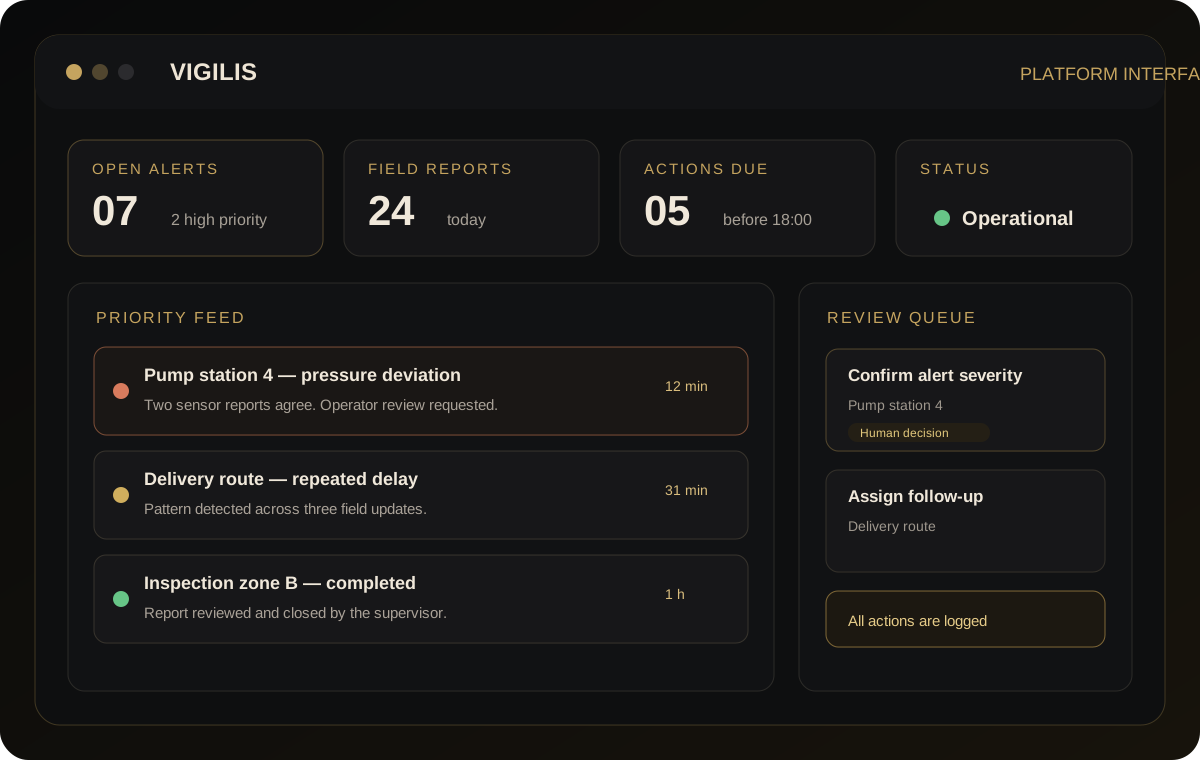
A governed operational workbench that turns fragmented reports and signals into priorities, briefs and traceable action.
01 / The operational need
Important signals are easily lost across reports, messages, feeds and separate dashboards. Vigilis is designed to consolidate approved information, apply defined prioritisation rules and preserve the path from observation to acknowledgement, escalation and action.
Designed for
Operational shape
The exact boundary is agreed during assessment. These examples show the intended shape of the product, not a claim of universal compatibility.
Principal applications
The final scope is established during assessment and validated through a controlled pilot before wider deployment.
Core capabilities
Bring authorised feeds, reports and updates into a coherent view without erasing their origin or status.
Apply agreed criteria, thresholds and context to surface information that requires professional attention.
Prepare concise, source-linked summaries for shifts, incidents, programmes or leadership review.
Align views, alerts, acknowledgement and escalation paths with actual responsibilities.
Retain the context around observations, review, decisions, ownership and authorised follow-up.
Where appropriate, connect document, geospatial or scientific outputs from other KavakTech products into an operational workflow.
Illustrative governed workflow
Final workflows, roles and review gates are configured with the organisation and validated during the pilot.
Define the sources, event types, users, responsibilities and conditions that warrant attention.
Normalise, tag and relate reports or signals while preserving source and access boundaries.
Apply agreed rules and models to surface material changes and prepare role-appropriate context.
Authorised users validate, escalate or assign follow-up while the system retains a traceable action trail.
Vigilis can be assessed for connection to approved dashboards, document repositories, ticketing or case systems, operational feeds and communication workflows. Integration is deliberately bounded to avoid creating another uncontrolled information silo.
Access, availability, latency, continuity, source reliability and escalation responsibilities are assessed together. Architecture may range from a dedicated private environment to a more restricted deployment where operational sensitivity requires it.
Vigilis is a decision-support system. It does not make autonomous strategic or operational decisions; authorised professionals retain responsibility.
Controlled pilot
One workflow. One user group. One bounded information set. One validation process. A good pilot ends with a clear decision to stop, refine or scale.
Choose a clear supervision, incident, programme or continuity task.
Define who reviews signals, who escalates and who owns follow-up.
Test usefulness against known scenarios, false positives and missed-information risks.
Review utility, limitations, adoption and control requirements before expansion.
A controlled first conversation
A product discussion begins with the use case, intended users, information boundaries and validation criteria—not a generic demonstration.